

Your German website has a page explaining a service. You’re preparing the English version, and someone proposes a keyword that seems to describe it well. The wording is understandable and relevant to your business.
But would someone searching that phrase expect what the page offers?
That question is central to keyword translation. An English equivalent gives you a candidate to investigate. Before using it as a search target, you need to consider what people appear to be looking for and whether your page can meet that need.
In this article, a small hotel example will show how linguistic judgement, keyword estimates and examination of actual results can inform that decision.
What Are You Assessing When Translating Keywords?
There are several related questions to resolve.
Does the phrase express the intended meaning? A term needs to represent your product or service accurately.
Is there evidence that people search for it? Keyword tools provide estimates that can help you compare candidates and discover related wording.
Does the search fit the page? Someone using the phrase may want a different product, service or type of information from the one you provide.
This last question concerns search intent: what someone is trying to find or accomplish through a search.
A phrase may be associated with researching options, finding a particular website or making a booking. Those broad categories are useful, but they leave important distinctions unresolved. Two people ready to book may want entirely different services.
My guide to SEO translation explains the wider research and translation process. Here, we’ll follow one decision more closely: whether a plausible English candidate is suitable for a particular page.
Example: Choosing Search Language for Daytime Spa Access
Imagine a fictional German hotel with a page headed:
Tagesnutzung des Wellnessbereichs
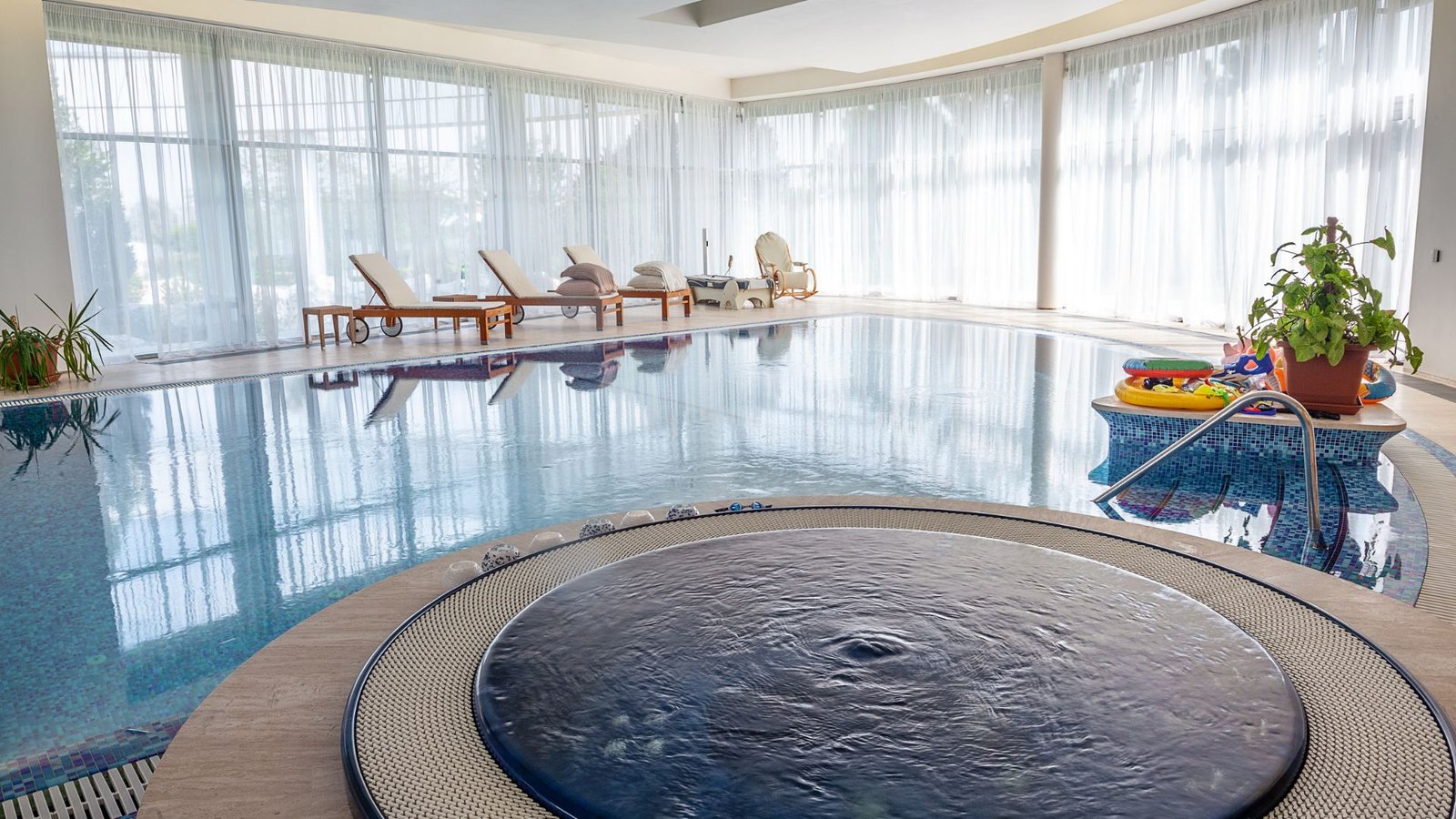
The page offers non-residents a bookable four-hour visit, including access to the pool, sauna and relaxation area. Treatments can be booked separately, subject to availability. No bedroom or meal is included.
The hotel wants the English page to help visitors staying in the surrounding area understand and book this experience, including visitors from the UK.
Its team proposes “hotel day use” as an English keyword. The phrase seems relevant: customers can use facilities at the hotel during the day.
However, it is a shortened search candidate, rather than a complete translation of the German heading. The explicit reference to the spa has disappeared. We need to investigate whether that affects what the phrase suggests.
The hotel and its offer are fictional. The keyword estimates and provider pages discussed below are research material examined for this article.
What Do the Keyword Estimates Tell Us?
For this comparison, I considered “hotel day use”, “spa day” and “spa day pass”.
The following Ubersuggest figures were recorded on 17 November 2026, using UK / English settings. The primary and secondary intent classifications are those displayed by the tool.
| Candidate | Estimated Monthly Searches | Primary Intent | Secondary Intent |
| hotel day use | 10 | Navigational | Transactional |
| spa day | 74,000 | Informational | Commercial |
| spa day pass | 880 | Commercial | Transactional |
Navigational intent concerns finding a particular website or destination online. Informational searches seek information; commercial searches concern exploring or comparing options; transactional searches concern taking an action such as purchasing or booking.
These classifications describe broad purposes. They do not tell us whether the searcher expects a bedroom, a massage or access to a swimming pool.
The volume difference is striking. Yet choosing “spa day” simply because it has the largest estimate would leave the central question unanswered: how well does it fit this offer?
The figures also concern searches within the selected UK market. They do not establish demand for this particular hotel or for spa visits in its German destination.
What Do the Search Results Suggest People Expect?
I reviewed results for these phrases and related UK and hotel-specific searches, then examined representative provider pages.
This was a qualitative review conducted on 17 November 2026, not a controlled Google UK ranking study. The observations help us assess possible interpretations; they do not establish what every searcher wants.
Hotel Day Use
The results included websites offering hotel rooms for use during the day. The Dayuse website, for example, prominently presents daytime room bookings.
That creates a potential mismatch. Our fictional hotel is offering spa access without a bedroom. Someone seeking a room for a few hours would not find that service on the page.
However, the expression is not restricted to room bookings. Crown Spa Hotel’s “Day Use” page describes access to health-club facilities and a light lunch.
We therefore cannot conclude that “hotel day use” is incorrect. The useful finding is more specific: it has a room-booking interpretation that makes it a less precise primary target for this spa offer.
Spa Day
“Spa day” identifies the relevant activity more clearly. The results included experiences involving spa facilities, treatments and food in various combinations.
But a treatment or meal is not an automatic part of every spa day. The Newman’s frequently asked questions describe three-hour spa access for non-residents, with treatments and wellness classes available to book additionally.
The phrase is therefore relevant to our fictional offer. Its breadth means we still need to explain what this particular visit includes.
The large search estimate does not make it the only phrase worth pursuing, nor does the variation in packages make it unsuitable. It remains useful language to consider alongside more specific wording.
Spa Day Pass
“Spa day pass” produced several close parallels to facilities access without an overnight stay.
Hilton London Syon Park’s spa information distinguishes packages from spa day passes and describes four hours’ use of the facilities for non-residents. The Newman also uses “spa day pass” for advance purchase of access, with treatments offered separately.
Those examples support the phrase as a credible candidate for our hotel.
They do not give it a fixed definition. Courthouse Hotel Soho’s facilities pass excludes treatments and allows one hour’s use. Despite the wording “day pass”, customers do not necessarily receive access throughout the day.
Duration, facilities and additional services still need stating clearly. The keyword identifies the kind of visit; the description establishes what customers can book.
Which Candidate Best Fits This Page?
Of these three candidates, “spa day pass” provides the strongest starting point for further research for the fictional hotel’s four-hour facilities offer.
It identifies spa access more specifically than “hotel day use”, and the provider examples show comparable arrangements. “Spa day” remains relevant supporting language.
An illustrative heading could be:
Four-Hour Spa Day Pass in [Destination]
The description would then explain access to the pool, sauna and relaxation area, with treatments available separately. It would make clear that the visit does not include a bedroom or meal.
This is a proposed application of the findings, rather than a tested ranking recommendation.
The next research step would involve the actual destination. Someone searching from the UK may want a spa near home or one to visit during a trip to Germany. The hotel’s keyword research therefore needs to consider searches that name its destination.
The broad UK estimates help us explore terminology. They cannot replace checking relevant destination-specific searches and the pages returned for them.
Does the German Heading Have to Be Translated Word for Word?
No. A natural descriptive translation might refer to daytime access to the spa. Search research can then inform whether “spa day pass” is appropriate in the heading, title or supporting copy.
The page does not have to use one expression everywhere. Readers may benefit from both a recognisable label and a straightforward explanation.
The hotel should also confirm that “pass” accurately represents what customers purchase. The translator should not introduce a new booking arrangement merely to accommodate a keyword.
How Should the Findings Inform the Translation Brief?
Research becomes useful when its implications are clear enough to guide the work.
For this hotel, the brief could record:
- The intended customer: non-residents considering a daytime spa visit in the destination.
- The confirmed offer: four hours’ access to specified facilities, with treatments booked separately and no room or meal included.
- The proposed search direction: investigate “spa day pass” with relevant destination wording.
- Supporting language: use “spa day” and descriptions of spa access where they read naturally.
- The adaptation allowed: revise headings and accompanying page information while preserving the service details.
- Outstanding work: complete destination-specific research and agree who will implement the finished content.
This gives the client a basis for understanding the recommendation. It also distinguishes the suggested wording from the evidence still needed before publication.
If you’re preparing a project, my translation brief template provides space to record search requirements, reference materials and the scope for adaptation.
Keyword translation works best when the wording, research and page purpose are considered together. In this example, the most useful outcome is a clearer understanding of which search candidate deserves further investigation and what the English page needs to communicate.
If you’re preparing English website content and would like support assessing proposed search terms, get in touch to discuss your project. We can explore how the research should inform the translation and which decisions need agreeing before drafting.