

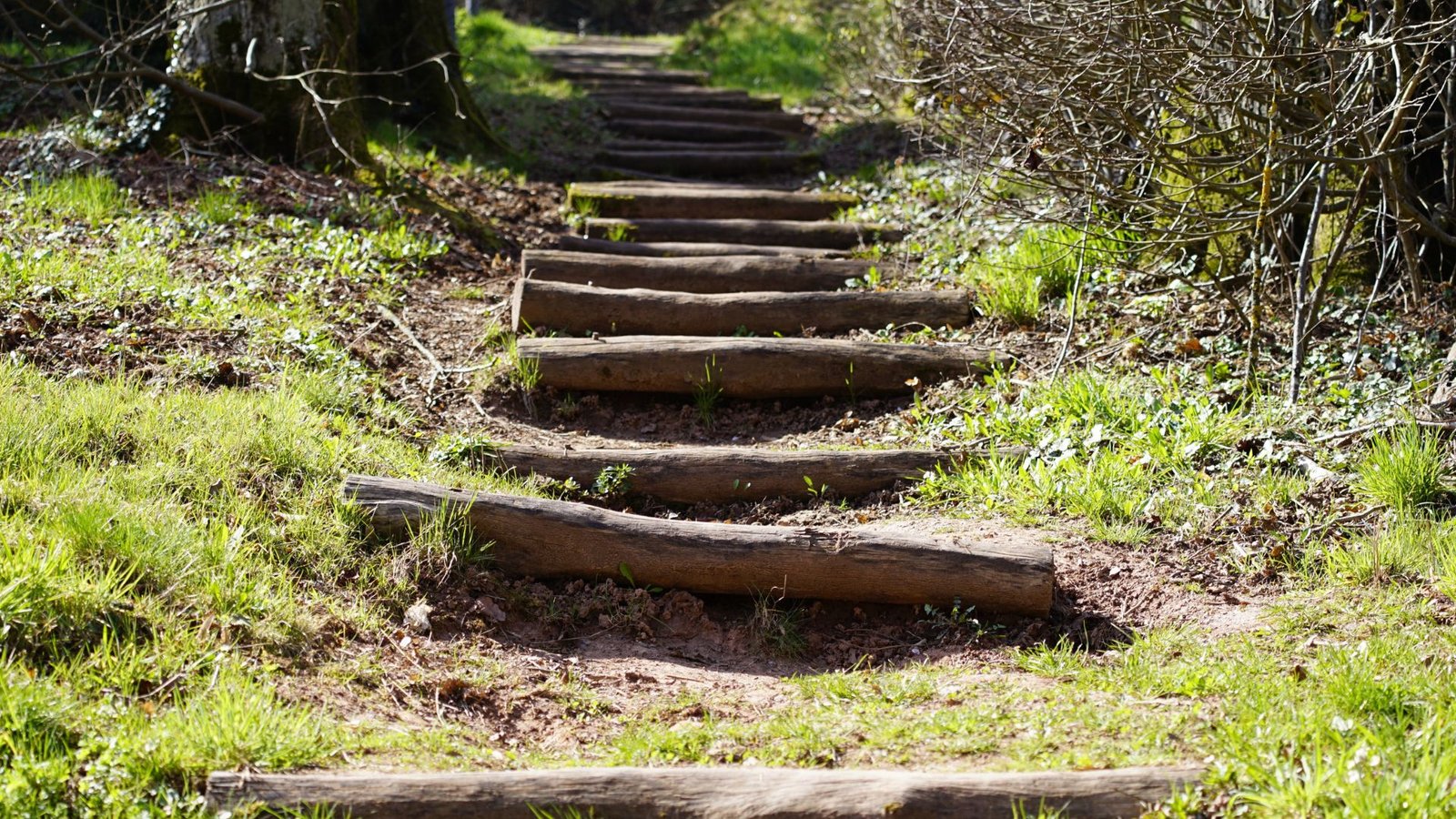
A visitor is considering a woodland walk with an optional detour to a viewpoint. The main route sounds appealing, and the photographs suggest somewhere worth exploring. Before deciding, they want to understand what the walk involves.
Does the published distance include the detour? Where are the steps? Will the name in the English description match the signs along the path?
These questions shape walking guide translation. The English needs to convey the character of the walk while keeping its practical details connected to the correct route or section. Visitors should be able to distinguish their options and understand the information supplied for each.
What Does a Translated Walking Guide Need to Communicate?
A destination webpage might introduce a walk and help visitors decide whether to explore it further. A detailed guide may also provide instructions for following the route.
The translator needs to know which purpose the text serves.
An overview supported by a map can explain the starting point, route options and relevant terrain without describing every junction. Turn-by-turn instructions require closer attention to individual directions and landmarks.
Both need a clear relationship with the accompanying information. If the map identifies a viewpoint by its German name, visitors need to recognise that connection in the English.
The description can also give them something to anticipate: a stretch through woodland or a view from the optional climb. Those details should come from the source material or confirmed references, just as the practical route information does.
Which Route Details Need Particular Care?
The Main Route and Optional Sections
A route description may combine a main circuit with a detour, shortcut or alternative return.
Those options need to remain distinguishable. A description of steps on an optional climb should not leave readers thinking they occur on the main circuit. Equally, an inviting account of the viewpoint should make clear that reaching it involves additional walking.
The translator must follow the route’s structure before deciding how to express it.
Distances and Walking Times
A distance can describe the whole walk, one section or the additional ground covered by a detour.
“An extra kilometre there and back” adds 1 km to the walk. “A kilometre to the viewpoint” could mean an additional 2 km if visitors must return along the same path.
Timings need similar attention. An estimated walking time may exclude breaks or apply only to the main route. The English should preserve those limits, rather than present the figure as the total time everyone will spend on the outing.
Making Clear Where Terrain Features Occur
Words describing a steep climb, steps or an uneven surface help visitors assess particular parts of a walk.
Their location matters. Moving a qualification into a general introduction may make its scope less clear, even when the words themselves remain accurate.
Specific information also gives readers more to assess than an unexplained adjective such as “easy”. If a provider supplies a difficulty rating, the translator needs to understand its intended meaning and any classification behind it before choosing the English wording.
Example: Translating a Woodland Walk With a Viewpoint Detour
Consider a fictional destination organisation preparing an English route overview for independent visitors. The webpage is supported by a map.
For this illustration, the provider confirms that:
- The main route is a 5 km circular walk starting and finishing at the village information centre.
- Its estimated walking time is 1½ hours, excluding stops.
- An optional detour leads to the Falkenblick viewpoint and returns along the same path to the main route.
- The detour adds 1 km in total and an estimated 30 minutes of walking, excluding time at the viewpoint.
- A steep section with steps is on the detour.
- Local signs use the name “Falkenblick”.
The brief calls for welcoming, precise British English. Sentence structure and the order of information can change, but practical details must remain accurate.
The following German extracts and suggested translations are constructed illustrations, not descriptions of an actual route.
Introducing the Main Circuit
German
Der 5 km lange Rundweg beginnt und endet an der Tourist-Information im Dorf. Planen Sie für die Runde etwa 1½ Stunden reine Gehzeit ein. Der Weg führt durch den Wald.
Suggested English
This 5 km circular walk starts and finishes at the village information centre and takes you through woodland. Allow approximately 1½ hours of walking time, excluding stops.
“Circular walk” explains that the route returns to its starting point. The next sentence preserves the estimate and makes the meaning of reine Gehzeit explicit.
“Excluding stops” helps visitors interpret the figure. It leaves room for a pause along the way without suggesting that the provider has included it in the estimate.
The English also brings the woodland setting into the opening sentence. This gives readers a simple picture of the experience while keeping the practical information easy to find.
Explaining the Additional Distance
German
Ein optionaler Abstecher führt zum Aussichtspunkt Falkenblick. Hin- und Rückweg verlängern die Strecke um insgesamt 1 km. Rechnen Sie dafür mit etwa 30 Minuten zusätzlicher Gehzeit, ohne Aufenthalt am Aussichtspunkt.
Suggested English
An optional detour leads you to the Falkenblick viewpoint. The walk there and back adds 1 km to the route. Factor in approximately 30 minutes of additional walking time, plus any time you spend at the viewpoint.
“The walk there and back” establishes what the additional kilometre covers. Readers do not have to infer whether the figure applies in one direction or both.
The time statement follows the same distinction. It adds walking time to the main circuit’s estimate and treats the stop at the viewpoint separately.
“Detour” is one reasonable choice for Abstecher here. “Optional side trip” could also work, depending on the terminology used elsewhere in the guide. Either needs to remain clearly separate from the main circular walk.
Locating the Steep Section and Steps
German
Der Abstecher umfasst einen steilen Abschnitt mit Stufen. Vom Aussichtspunkt kehren Sie auf demselben Weg zum Rundweg zurück.
Suggested English
The detour includes a steep section with steps. From the viewpoint, you’ll retrace your steps to rejoin the main circular route.
Repeating “the detour” gives the terrain information a clear scope. A shorter opening such as “It includes…” could become uncertain if the passage were separated from the preceding paragraph during page design.
The description of the return also establishes the route’s shape. Visitors go back along the same path before continuing around the main circuit.
These details do not establish that the main route is level or step-free. The English should not add either claim simply because the provider has identified steps on the detour.
Should Local Place Names Be Translated?
In this example, “the Falkenblick viewpoint” combines the name visitors will see on signs with an English explanation of what it identifies.
Translating the name as “Falcon View” might convey the name’s meaning, but it could make the connection with local signs less obvious if used on its own.
Retaining the German name is therefore useful under this brief.
Other circumstances may call for another approach. A destination might have an established English name, bilingual signs or an approved naming policy. The translator should check those references rather than apply one rule to every place name.
Consistency with maps matters too. A clear English description becomes less useful if it appears to refer to a different location from the one marked on the visitor’s map.
What Should the Translator Query?
Consider a separate enquiry in which the translator receives a description of a circular walk with an optional viewpoint detour. The accompanying summary gives a distance of 6 km, but neither the text nor the supplied map establishes whether that figure includes the detour.
A focused question would be:
Does the stated distance cover the main circuit only, or does it include the return detour to the viewpoint?
The answer determines how the English should label the figure. A note such as “including the viewpoint detour” may resolve the uncertainty once the provider confirms it.
My article on why translators ask questions explores how these exchanges help establish what belongs in the translation.
The same care applies to suitability statements. A translator can communicate supplied information about surfaces or gradients and query unclear wording. Assessing the route itself, or assigning a new difficulty or accessibility classification, requires the relevant knowledge and an agreed responsibility.
What Should You Supply for Walking Guide Translation?
Alongside the German text, useful references include:
- The current route map, showing the main circuit and any alternatives.
- Confirmed distances and timings, with an explanation of what each figure covers.
- Terrain and route information, including the sections to which particular details apply.
- Names used on signs and maps, plus any approved English equivalents.
- Photographs of relevant features, where they help identify a landmark or clarify the description.
- The intended format and review arrangements, including who will resolve questions and approve the route information.
Let the translator know whether the text helps visitors choose a walk, follow it or both. That distinction affects how much detail the English needs and how closely it must work with the map.
Before publication, read the translated overview alongside the route summary, map and photographs. Check that each distance, time and terrain note still applies to the intended option after the text has been placed in the layout.
My guide to tourism translation looks more broadly at combining an appealing introduction with useful visitor information.
If you’re preparing walking guides or route descriptions for English-speaking visitors, get in touch to discuss your content. We can explore how the English can convey the experience and help readers understand the route you’re describing.