

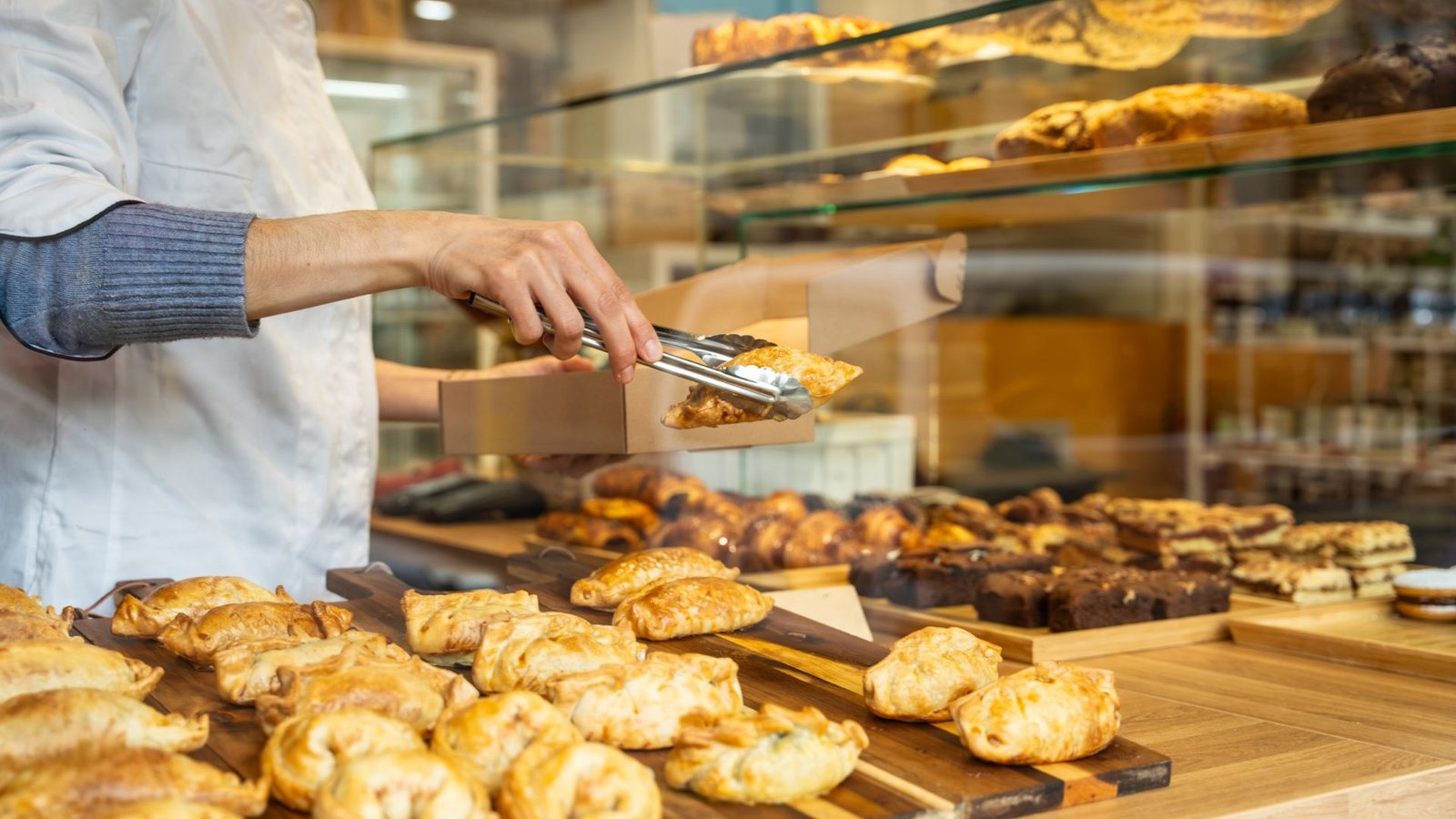
A café owner is considering a new savoury pastry for the lunchtime counter. The photograph catches their attention, and the filling sounds appealing. Before ordering, they also need to understand what arrives in the case and what staff must do before serving it.
Does it need baking? Can it be offered cold afterwards? How many pieces does the case contain?
A sales sheet brings those considerations together. Food product sheet translation needs to preserve the product’s appeal while giving professional buyers a clear understanding of what they are purchasing and how they could use it.
The decisions often lie in small details: a product name, a preparation term or the relationship between a serving suggestion and an instruction.
What Does a Professional Buyer Need from a Product Sheet?
A professional buyer is assessing the product in the context of a business. Alongside flavour and appearance, they may be considering preparation arrangements, portion size and where it would fit within an existing range.
A sales-oriented product sheet can help them make that assessment. It might combine a photograph and short description with preparation information, unit weight, case quantity and an ordering reference.
Businesses organise these documents differently. Some include extensive technical information; others provide a separate specification. Here, we’re considering a sheet used to introduce a product and support a purchasing discussion.
Its English needs to work for that purpose. An appetising description can encourage interest, while clear practical information helps the buyer decide whether to investigate further.
Which Details Need Particular Care in Translation?
Product Identity and Sensory Description
The English name should help buyers recognise what the product is. A familiar German category or shortened trade name may need a more explicit expression in English.
The accompanying description can explain its filling, texture or appearance. Those details need to represent the actual product: a crisp pastry shell suggests something different from a soft bread roll, even if both contain cheese and spinach.
Photographs help establish the form. Product information supplies details that an image cannot reliably confirm, such as which cheese is used or how the pastry behaves after preparation.
Your established English range terminology matters too. A suitable name for one product should also make sense alongside the others.
Supplied State and Preparation
Buyers need to distinguish what they receive from what they can eventually serve.
“Frozen”, “unbaked”, “part-baked” and “fully baked” describe different aspects of a product’s condition. The English should preserve the distinctions established in the source information.
Preparation instructions then explain what must happen before service. A convenient-sounding phrase such as “ready to use” may leave too much open if the product still requires baking.
The translator needs enough supporting information to choose the appropriate wording and identify any uncertainty.
Serving Suggestions
A serving suggestion describes a possible use. It should remain distinguishable from a required preparation step.
A pastry might be suitable for serving cold after baking. That does not mean it can be served simply by thawing it.
Similarly, suggesting a product be served alongside a salad does not establish a particular portion size or nutritional benefit. The wording should communicate the proposed use without acquiring additional claims.
Example: Translating a Savoury Pastry Product Sheet
Consider a fictional German producer preparing an English sales sheet for cafés and bakery counters.
The product is a spinach-and-cheese puff pastry slice with a lattice top. It is supplied frozen and unbaked, and must be baked according to the producer’s instructions before serving. Once baked, it can be served warm or cold.
The producer suggests offering it as a savoury snack or alongside a salad. Each unbaked piece weighs 120 g, and a case contains 40 pieces.
The brief calls for British English and an appetising, measured tone. Natural restructuring is welcome, while added benefits require confirmation.
The following extracts are constructed illustrations. They are not client materials or observed AI outputs.
Giving the Product a Recognisable English Name
German Name
Spinat-Käse-Schnitte
Suggested English Name
Spinach and Cheese Puff Pastry Slice
“Schnitte” alone does not establish whether the product is bread-based, pastry-based or another preparation. Here, the confirmed product information identifies puff pastry, so the English name makes that explicit. The choice comes from understanding the product, rather than translating the name in isolation.
“Spinach and cheese slice” could describe several different products. Adding “puff pastry” gives the professional buyer a firmer starting point.
This is one possible name. “Spinach and cheese lattice” might also suit a supplier whose range consistently uses “lattice” for this format. The photograph, related product names and approved terminology would inform that decision.
Keeping the Description Appetising and Specific
German Description
Blättriger Blätterteig mit einer herzhaften Spinat-Käse-Füllung und dekorativem Gitter.
Suggested English Description
Flaky puff pastry with a savoury spinach and cheese filling and a decorative lattice top.
“Flaky” gives buyers a concrete quality to picture. “Lattice top” locates the decorative feature more clearly than “lattice” alone.
The description does not need to become more elaborate to be appealing. Nor does it require an unsupported cheese variety, production method or claim about how customers will respond.
The English could take another form to suit the brand’s voice. What matters is that the sensory language remains grounded in the product.
Separating Preparation from Service
German Preparation and Serving Information
Tiefgekühlt, ungebacken. Vor dem Verzehr gemäß Zubereitungsanleitung backen. Nach dem Backen warm oder kalt servieren. Als herzhafter Snack oder als Beilage zu einem Salat.
Suggested English
Supplied frozen and unbaked. Bake according to the preparation instructions before serving. Once baked, serve warm or cold. Offer as a savoury snack or alongside a salad.
“Supplied” establishes the condition in which the buyer receives the product.
“Once baked” then makes the serving options explicit. The customer can distinguish the required preparation from the choice of serving temperature.
The final sentence presents possible uses. “Alongside a salad” gives a straightforward serving suggestion without implying that the pastry has a fixed role as a side dish.
In a designed sheet, preparation and serving suggestions might appear in separate fields. Their headings and placement should preserve the same distinction.
Making Quantities Easy to Interpret
German
Stückgewicht ungebacken: 120 g
Kartoninhalt: 40 Stück
Suggested English
Unbaked weight per piece: 120 g
Case quantity: 40 pieces
The weight refers to the unbaked product. Retaining that qualification avoids presenting it as the weight after preparation.
“Case quantity” also identifies what the buyer orders. If the supplier has an approved English field name, that should guide the wording across the range.
These short entries deserve the same attention as the descriptive paragraph. They support a different part of the purchasing decision.
What Should the Translator Query Rather Than Assume?
Suppose another part of the German sheet describes the product as backfertig.
“Ready to bake” may be an appropriate English expression, but the translator still needs to establish the intended preparation process. Does the product go directly from the freezer into the oven, or is another step required?
The facts established for our example confirm that baking is necessary. They do not specify whether the pastry must first be partially or fully thawed.
The translator should therefore check the producer’s instructions or raise a query before adding “bake from frozen”. That instruction would need confirmation.
The same principle applies to commercial benefits. The product’s supplied state does not, by itself, support claims such as “cuts preparation time” or “requires no skilled staff”. Those statements need information about the process and the comparison being made.
A useful query identifies what needs resolving and why: Can you confirm whether the pastry is baked directly from frozen? This determines whether we can include that instruction in the English preparation field.
What Should You Supply for Product Sheet Translation?
The German sheet provides the starting point. Related materials help the translator interpret it accurately.
Useful references include:
- Current product and preparation information, including any separate instructions or specification.
- Photographs, showing the supplied product and serving presentation where relevant.
- Approved English names and terminology, particularly for related products.
- The intended audience and market, such as café operators buying for UK premises.
- The layout and delivery requirements, including fixed fields, available space and whether the English will be inserted into the design.
Identify which document is current if several versions exist. Where descriptions and preparation information disagree, someone with product knowledge needs to resolve the discrepancy.
If ingredients, allergens or other controlled information are included, establish the approved materials and relevant review responsibilities as part of the commission.
For a practical way to record the wider project requirements, my translation brief template provides prompts and space for outstanding questions.
How Can You Review the Finished English Sheet?
Read the English as a prospective professional buyer would.
Can you identify the product, understand its supplied state and see what preparation is required? Are serving suggestions clearly presented? Do the quantities refer to the correct unit and condition?
Then check the wording in the layout. A preparation note placed beneath the wrong heading or a qualification lost during insertion can change how the information is understood.
My guide to German-to-English food and drink translation explores the wider decisions involved in presenting products to English-speaking readers.
If you’re preparing English product sheets for professional customers, get in touch to discuss your food content. We can explore what buyers need to understand and how the translation can communicate it clearly and appealingly.